
Table of Contents
Introduction
Choosing the right industrial finish involves more than comparing prices or selecting a colour. Businesses need durable materials, consistent shades, reliable supply, and technical support to maintain product quality. Before evaluating industrial coating solutions, buyers should understand how manufacturers differ in formulation, quality control, customization, and production capacity.
India has a diverse market serving automotive, furniture, construction, electrical equipment, and general engineering industries. However, not every supplier offers the same technical capabilities or product range. When comparing powder coating manufacturers in India, businesses should consider application requirements, environmental exposure, production volume, and long-term procurement costs.
This guide explains the essential factors to evaluate before selecting a supplier for industrial or commercial applications.
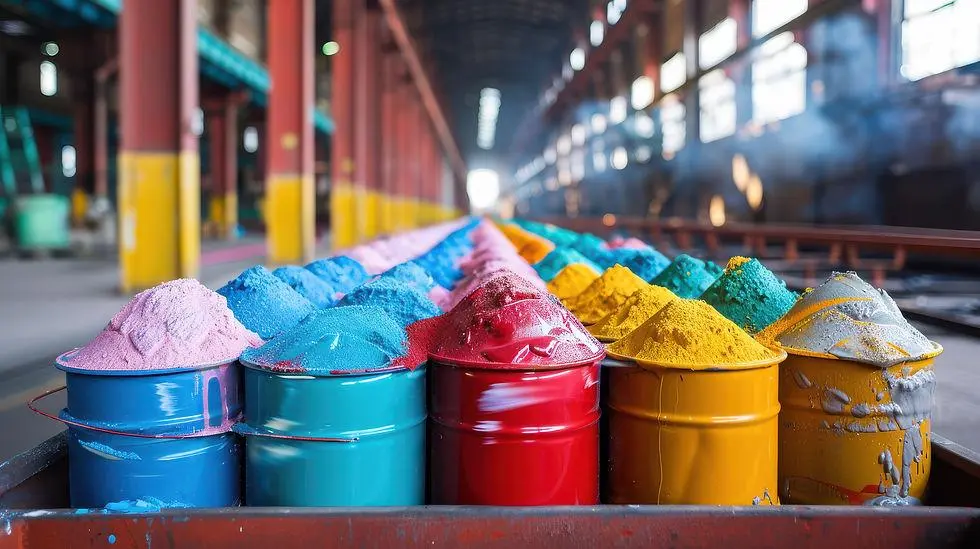
Understanding Different Types of Manufacturers and Suppliers
Industrial Manufacturers
Regional and Specialist Manufacturers
Regional manufacturers may provide easier communication, faster deliveries, and more responsive technical support. Businesses searching for a powder coating manufacturer Gujarat can consider local suppliers alongside national manufacturers, provided they meet the same quality and performance criteria.
Specialist producers can also develop custom powder coating shades for branded products, architectural components, and industrial equipment. Before placing a large order, request a sample and confirm the supplier’s ability to reproduce the approved shade consistently.Distributors and Wholesale Suppliers
A powder coating supplier may provide products from several brands, making distribution useful for businesses that need smaller quantities or multiple product grades. Wholesale purchasing can also help consolidate recurring orders.
However, distributors may have limited control over production schedules and formulation changes. Confirm the original manufacturer, batch identification, product documentation, and complaint-handling process before establishing a long-term relationship.OEM and Bulk-Supply Partners
An OEM powder coating supplier must understand production schedules, approved specifications, and repeat-order requirements. Consistent supply becomes particularly important when coating defects can delay assembly or affect the quality of finished goods.
A bulk powder coating supplier should therefore demonstrate reliable scheduling, appropriate packaging, technical support, and the capacity to fulfil recurring orders.
Which Formulation Is Suitable for Your Application?
Epoxy Formulations
Epoxy products generally provide strong adhesion and good resistance to many chemicals. They are commonly used for indoor electrical enclosures, industrial components, machinery, and equipment where chemical resistance is important.
Their main limitation is poor long-term UV resistance. Direct sunlight can cause chalking and deterioration in appearance, making standard epoxy grades unsuitable for many exposed outdoor applications.Epoxy-Polyester Hybrid Formulations
How to Evaluate Quality and Batch Consistency
A sample that looks attractive does not automatically demonstrate long-term performance. Quality depends on formulation, surface preparation, application settings, and correct curing.
When comparing powder coating manufacturers in India, ask how the supplier controls raw materials, monitors production, tests finished batches, and investigates customer complaints. Documented quality procedures help buyers assess whether the supplier can maintain consistent results across repeat orders.
Important evaluation parameters include adhesion to the substrate, colour accuracy, gloss level, recommended curing conditions, film thickness, and mechanical resistance. Depending on the application, corrosion testing and weathering assessments may also be necessary.
Not every product requires the same tests. Buyers should establish acceptance criteria based on the intended use, customer specifications, and applicable industry standards.
Why Batch Consistency Matters
Variations in pigments, raw materials, manufacturing conditions, or curing behaviour can cause differences between production batches. These inconsistencies may lead to rejected components, additional inspection, and costly rework.
Check whether the manufacturer records each batch, keeps approved samples for comparison, and tracks production details. For applications where colour accuracy is important, define acceptable shade variations and establish a clear approval process for future batches.
A reliable industrial powder coating supplier should also explain how technical specifications are maintained when materials or formulations change.Comparing Colours, Finishes, and Customization
Colour selection affects brand identity, product appearance, and customer expectations. Buyers may require standard RAL shades, metallic effects, textured surfaces, or a particular gloss level.
When evaluating powder coating colour manufacturers, check whether they can match reference samples, document approved formulations, and reproduce colours for future orders. A colour code helps establish the target, but the finished appearance can still vary with substrate, film thickness, texture, lighting, and curing conditions.
For repeat production, approve a physical sample under agreed viewing conditions. Outdoor products should also use a formulation designed for the expected UV exposure and weathering requirements. Decorative similarity alone does not establish durability.What Affects Pricing and Procurement Costs?
The quoted price per kilogram is only one part of the purchasing decision. A lower-priced formulation may increase material consumption, generate more rejected parts, or fail to provide the required service life.
When comparing suppliers, consider the following factors.Formulation and performance: Specialist resin systems, metallic effects, and custom-developed shades may cost more than standard products. The additional expense can be justified when the application requires specific performance characteristics.
Order volume: Bulk purchases may qualify for volume-based pricing, depending on minimum quantities, packaging, and delivery arrangements. Smaller recurring orders may be preferable when storage capacity and working capital are limited.
Application efficiency: Material usage depends on component geometry, transfer efficiency, film thickness, and reclaim practices. A suitable formulation that works reliably with the existing production line can reduce waste.
Technical assistance: Application guidance and troubleshooting support can help prevent defects and production interruptions, especially in automated manufacturing environments.Compare the total cost of achieving an acceptable finished product rather than choosing solely on the lowest quotation.What Should Buyers Verify Before Placing an Order?
Before selecting a supplier, establish clear technical and commercial expectations. This is particularly important for OEMs, fabricators, and businesses purchasing material regularly.
A practical evaluation should cover:
- Approved samples: Confirm the required colour, gloss, texture, and appearance.
- Technical documentation: Request the technical data sheet (TDS), safety data sheet (SDS), and recommended curing instructions.
- Quality acceptance: Define applicable tests, tolerances, and inspection procedures.
- Delivery commitments: Confirm minimum order quantities, lead times, packaging, and replenishment schedules.
- Defect resolution: Agree on how rejected batches, technical investigations, and replacements will be handled.
How to Compare Suppliers Before Making a Final Decision
| Evaluation factor | What to check |
|---|---|
| Manufacturing capability | Production capacity and traceability |
| Technical suitability | Resin system and exposure requirements |
| Quality assurance | Batch testing and acceptance criteria |
| Colour customization | Shade matching and repeatability |
| Commercial terms | Pricing and minimum quantities |
| Supply reliability | Lead times and logistics |
| Technical support | Application guidance and defect resolution |
Shortlist two or three suitable suppliers and request samples, documentation, and quotations based on the same specifications. Test each product under the same application conditions and compare material usage, coating performance, and the quality of the finished components.
When choosing a supplier, businesses should assess communication quality, response speed, and the capacity to meet future production needs.Conclusion
Selecting the right industrial finishing partner requires a balanced assessment of technical performance, batch consistency, customization, supply reliability, and overall procurement costs. The most suitable supplier is one that meets your specifications consistently and supports your production requirements over time.
When comparing powder coating manufacturers in India, evaluate samples, quality procedures, technical documentation, and commercial terms before committing to a long-term agreement.
For industrial coating requirements, colour customization, or bulk purchasing enquiries, visit Prismcoats to explore its product range and discuss your application needs.