
How Industrial Powder Coating Improves Durability & Surface Protection

Table of Contents

Introduction

In industries where metal components face constant exposure to moisture, chemicals, abrasion, and extreme temperatures, surface protection isn’t optional,it’s the difference between equipment that lasts decades and equipment that fails within a few years. This is where industrial powder coating has become the preferred finishing method across manufacturing, automotive, and construction sectors. It creates a tougher, more resilient surface that withstands harsh operating conditions while also supporting sustainability goals. If you’re evaluating surface protection solutions for your metal products, understanding how this process works, and why it outperforms traditional coatings, is the first step toward making an informed decision.
Industrial Powder Coating

What Is Industrial Powder Coating?

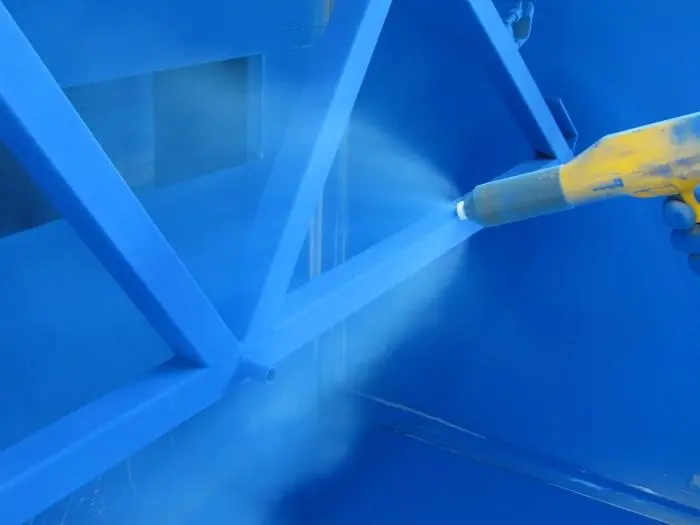
This finishing process involves applying finely ground particles of pigment and resin onto a metal surface using an electrostatic charge. The charged powder clings to the grounded object, and once applied, the part is cured under heat, causing the powder to melt, flow, and chemically bond into a smooth, continuous film. This is fundamentally different from liquid paint, which relies on solvents that evaporate as the coating dries. Because there’s no solvent involved, this dry-finishing method produces a denser, more uniform layer with far fewer imperfections like drips, runs, or thin spots common issues with wet paint application. This process falls under the broader category of industrial coating powder systems widely used across sectors that require finishes capable of enduring years of mechanical stress and environmental exposure.

Why Durability Matters in Industrial Applications

For manufacturers and facility operators, surface failure isn’t just a cosmetic problem, it’s an operational and financial one. Corrosion, abrasion, ultraviolet exposure, and chemical contact are the primary culprits behind coating breakdown, and each can compromise the structural integrity of metal parts over time. Rust that starts as a small pit can spread beneath the surface, weakening load-bearing components long before visible damage appears. Similarly, repeated friction from moving machinery parts or exposure to industrial solvents can strip away thin or poorly adhered coatings within months rather than years. The financial impact goes beyond replacement costs; it includes unplanned downtime, safety risks, and labor for repeated maintenance cycles. This is precisely why so many businesses are shifting toward industrial powder coating, it addresses these failure points at the material level rather than simply masking them cosmetically.

How Powder Coating Enhances Durability

Resistance to Corrosion, Abrasion & Chemicals

One of the biggest advantages of this finishing method is the thickness and density of the film it creates. Because the coating cures into a cross-linked polymer layer, it forms a protective barrier that resists moisture penetration far more effectively than thin liquid paint layers. This makes it especially valuable for outdoor equipment, marine-adjacent machinery, and structures exposed to humidity or saltwater. The same dense film also resists abrasion from friction, impact, and general wear, making it a practical choice for machinery parts, tools, and transportation components that undergo constant handling. Many formulations are also engineered to resist chemical exposure, which is critical in facilities that handle solvents, acids, or industrial cleaning agents. Metal powder coating finishes, in particular, are widely chosen for exactly this combination of chemical and mechanical resistance.

UV and Weathering Resistance

Outdoor structures and equipment face a different kind of stress: prolonged sunlight exposure. UV rays break down the molecular structure of many conventional coatings, leading to fading, chalking, and eventual cracking. Formulations built with UV-resistant resins, particularly polyester and fluoropolymer-based options, are designed to hold their color and structural integrity even after years of direct sun exposure. This is one of the reasons architectural metalwork, outdoor railings, and transportation equipment increasingly rely on powder coating for metal rather than traditional paint systems, which tend to require more frequent recoating.

The Science Behind the Strength

Cross-Linking During Curing

The real strength of industrial powder coating comes down to a chemical process called cross-linking. During curing, heat causes the powder particles to melt and flow together, and the resin molecules form covalent bonds with one another. This creates a single, continuous polymer network rather than layered particles sitting on top of the metal surface. The result is a coating far more resistant to chipping, peeling, and flaking compared to liquid paint, where the film simply dries without this same molecular bonding. This is a key reason many procurement teams specifically request industrial powder coating solution,when specifying finishes for long-life industrial assets.

Coating Types: Epoxy, Polyester, Hybrid & Fluoropolymer

Not all powder coatings perform the same way, and choosing the right type matters as much as the application process itself. Epoxy coatings offer excellent adhesion and chemical resistance but tend to chalk under prolonged UV exposure, making them better suited for indoor applications. Polyester coatings, by contrast, hold up well outdoors and are commonly used for architectural and automotive parts. Hybrid coatings combine epoxy and polyester properties, offering a balance of durability and cost-efficiency for general industrial use. Fluoropolymer coatings sit at the premium end, delivering exceptional weather and chemical resistance for demanding environments like aerospace components or high-exposure structural steel. Selecting the right industrial powder coating powder formulation for the intended environment is essential to getting the expected lifespan out of the finish.

Industries That Rely on Powder Coating for Protection

The versatility of this finishing method has made it a standard across a wide range of sectors. In automotive and transportation, it protects chassis components, wheels, and frames from road debris, moisture, and temperature fluctuations. Heavy machinery manufacturers depend on it for equipment that faces constant mechanical stress and outdoor exposure on job sites. Architectural and structural steel applications benefit from the weather resistance and long-lasting color retention it provides, especially in railings, facades, and support structures. Household and commercial appliance manufacturers also use it extensively, since it offers a durable, scratch-resistant finish that holds up to daily handling. Across all these industries, the common thread is a need for finishes that reduce maintenance frequency while extending the service life of metal products, something industrial powder coating is specifically engineered to deliver.

Environmental and Efficiency Benefits

Beyond performance, this finishing process also offers meaningful advantages from a sustainability and production standpoint. Because it doesn’t rely on solvents, it emits little to no volatile organic compounds (VOCs), making it a cleaner alternative for facilities working to reduce their environmental footprint. Overspray during application can often be collected and reused, significantly cutting down on material waste compared to liquid paint systems where excess spray is typically lost. Production efficiency also improves, since coated parts cure relatively quickly in industrial ovens, allowing for faster turnaround times on large manufacturing runs. For companies balancing operational costs with environmental compliance, these efficiency gains often make industrial powder coating the more practical long-term choice.

Signs Your Surfaces Need Better Protection

Visual & Performance Indicators of Coating Failure

Recognizing the early signs of coating failure can save significant repair costs down the line. Chalking, fading, or a dull, powdery residue on the surface often signals that the existing finish is breaking down under UV exposure. Bubbling or blistering usually points to moisture trapped beneath the coating, an early warning sign of corrosion forming underneath. Chipping around edges or high-contact areas suggests the coating lacks the adhesion or flexibility needed for the application, while visible rust spots indicate the protective barrier has already been compromised.

When to Switch from Paint to Powder Coating
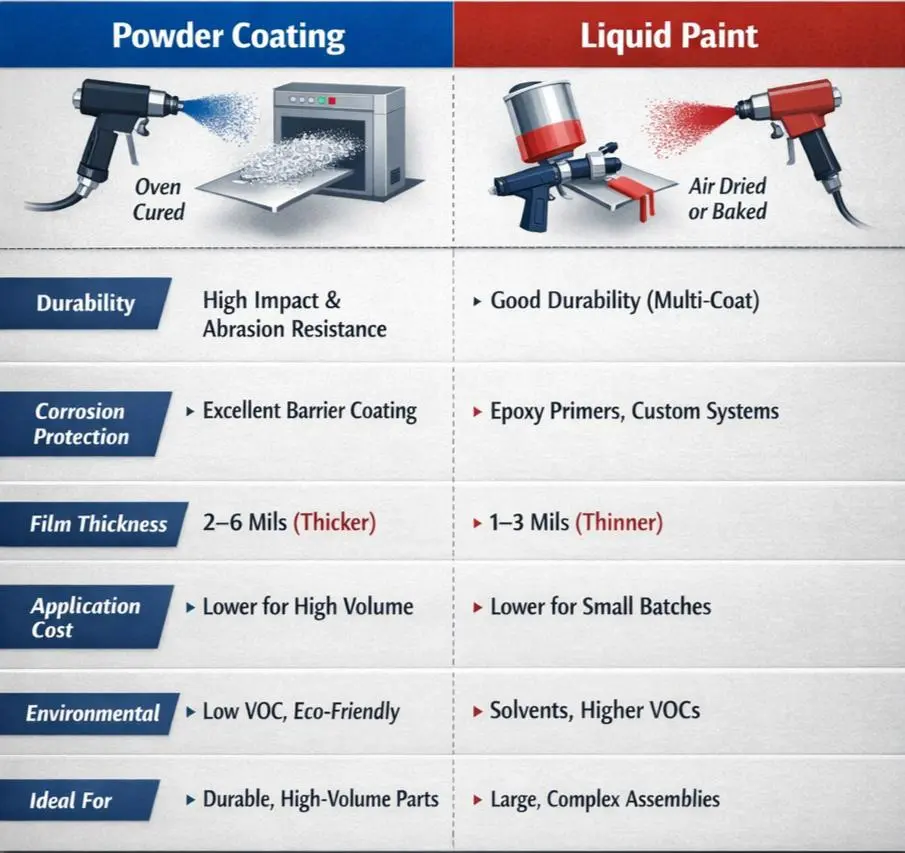
If your metal components show these signs repeatedly, or if you find yourself repainting the same equipment every year or two, it’s worth evaluating whether industrial powder coating is a better long-term fit. Facilities operating in harsh outdoor environments, coastal regions, or chemically active settings typically see the most dramatic improvement in coating lifespan after making this switch, often extending recoat intervals from a couple of years to well over a decade.
Powder Coating vs Liquid Paint

Best Practices for Maximizing Durability

Getting the full benefit of this finishing process depends heavily on proper preparation and application. Surface preparation is arguably the most critical step any dirt, oil, rust, or existing coating residue left on the metal will compromise adhesion, regardless of how good the formulation is. Processes like sandblasting, chemical pretreatment, or phosphate washing are commonly used to ensure the metal surface is fully clean and slightly roughened for better bonding. Choosing the right coating type for the specific application and environment matters just as much, since a formulation suited for indoor furniture won’t necessarily hold up on outdoor structural steel. Finally, maintaining accurate cure temperatures and times during the baking process ensures the cross-linking reaction completes properly; undercured coatings tend to remain soft and prone to damage, while overcuring can make the finish brittle. Facilities that pay close attention to these three factors consistently get significantly longer service life out of their coated components.

Conclusion

Choosing the right finishing process has a direct impact on how long your metal assets last and how much you’ll spend maintaining them over time. From corrosion and abrasion resistance to UV stability and chemical protection, industrial powder coating consistently outperforms traditional paint systems across nearly every measure that matters for industrial applications. Whether you’re protecting heavy machinery, architectural steel, or transportation components, investing in a durable, well-applied coating pays off in reduced downtime and fewer replacement cycles. If you’re ready to explore finishing options tailored to your specific equipment and environment, reach out to Prisamcoats to discuss the right solution for your project.

Scroll to Top