
Table of Contents
Introduction
When most people look at a freshly finished gate, a car wheel, or a kitchen appliance, they rarely stop to think about which type of finish is actually protecting the metal underneath. Yet the world of powder coating is far more varied than a single bag of color, and the chemistry you choose has a huge effect on how long that finish lasts, how it handles sunlight, and even how it feels to the touch. If you are trying to make sense of the different options before a project, this guide breaks them down in plain language, so you can understand what each one does well and where it falls short.
By the end, you’ll know the difference between epoxy and polyester, why some finishes are built for the outdoors while others belong strictly indoors, and how textures and gloss levels change the whole look of a part.
What These Finishes Actually Are
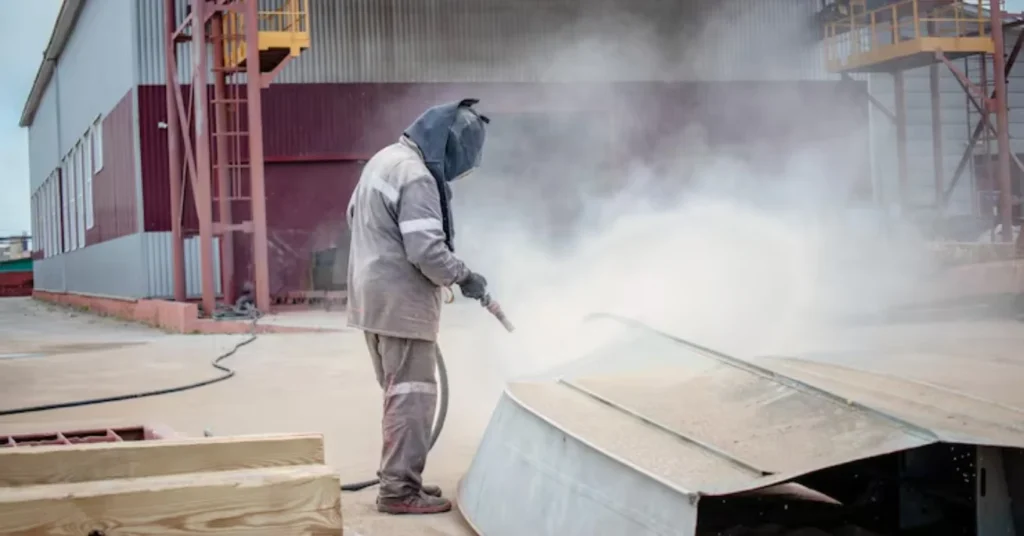
To make sense of the different types, it helps to understand how the basic process works in the first place. Powder coating is a dry finishing method in which fine particles of resin and pigment are given an electrostatic charge and sprayed onto a metal surface. The charged particles cling evenly to the part, which then passes through a curing oven where heat melts the powder and fuses it into a single, solid layer. Because that layer cures into a continuous film rather than simply drying like wet paint, the result is a tough, bonded finish with excellent durability.
The magic really happens in the oven. As the part heats up, the powder flows together and, depending on the chemistry, either chemically cross-links or simply melts and re-solidifies. This is also where the “type” of powder starts to matter, because each resin behaves differently under heat and against the elements. Two parts can look identical coming out of the booth, yet one may shrug off years of sun while the other fades in a single summer. That is why understanding the families of finishes is so worthwhile.
Thermoset vs Thermoplastic Powders
At the broadest level, these finishes fall into two groups. Thermoset powders chemically cross-link during curing, forming an irreversible bond that resists heat and solvents extremely well once set; epoxy, polyester, and their hybrids all belong here, and they make up the vast majority of everyday work.
Thermoplastic powders, such as nylon and polyethylene, melt and harden without changing chemically, which means they can be remelted later. These thicker, tougher coatings are common on things like dishwasher racks and outdoor railings where a heavy, protective layer is needed. For most decorative and architectural projects, though, thermoset chemistries are the ones you’ll be choosing between.
Epoxy Finishes
Strengths and the One Big Weakness
Where Epoxy Works Best
Polyester Finishes
TGIC vs TGIC-Free
Why It's the Outdoor Standard
Epoxy-Polyester Hybrids
Specialty and Premium Finishes
Looks and Textures Beyond the Chemistry
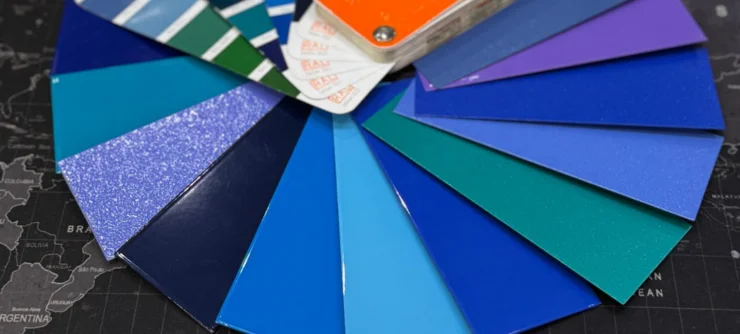
One thing that surprises newcomers is how much the same powder coating can vary in appearance. The resin family decides durability, but the finish, gloss, and texture decide the look entirely. A single color can be produced as a flat matte, a soft satin, or a mirror-like high gloss, and each reads very differently on a finished product.
Gloss Levels
Gloss is measured on a scale, and choosing the right level changes both style and practicality. The usual options break down like this:
- Matte and satin hide minor surface imperfections and resist visible fingerprints.
- Semi-gloss offers a balanced, professional look that’s easy to clean.
- High gloss delivers a bright, eye-catching shine but shows scratches more readily.
Textured, Hammertone, and Metallic Effects
Beyond gloss, texture adds another dimension. Fine and coarse textures help disguise imperfect substrates and add grip, while hammertone and wrinkle finishes create distinctive patterned surfaces. Metallic, candy, and anodized-look effects add depth and sparkle for products where appearance is a selling point. The beauty here is that durability and decoration aren’t a trade-off; you can usually get both.
How to Choose the Right Finish
Conclusion
Choosing a finish doesn’t have to be overwhelming once you understand the families behind it. Epoxy excels indoors, polyester rules the outdoors, hybrids bridge the gap, and specialty resins handle the most demanding jobs, with gloss and texture letting you fine-tune the look. Whichever powder coating finish suits your project, the real difference comes from a partner who applies it with care and recommends the right chemistry for your needs.
That’s exactly where Prismcoats comes in. With deep expertise across every finish type, precisely controlled curing, and a wide palette of colors and textures, Prismcoats helps you choose and apply a finish that genuinely lasts. Reach out to Prismcoats today for expert guidance or a quote, and give your products a finish built to perform.