
Table of Contents
Introduction
If you’ve ever wondered how the bright red frame of a tractor stays glossy after decades in the sun, or how your refrigerator’s outer panel still looks new after years of daily use, the answer is almost always the same finishing method. It’s a process called powder coating and once you understand how it works, you’ll start spotting it on metal surfaces everywhere you go.
This guide is for anyone hearing about this technology for the first time. We’ll walk through what it actually is, how the process works step by step, why so many industries prefer it over traditional paint, and where you’ll find it being used today. No heavy jargon, just a clear, honest explanation of one of the most important metal finishing methods in modern manufacturing.
What Is Powder Coating? A Simple Explanation
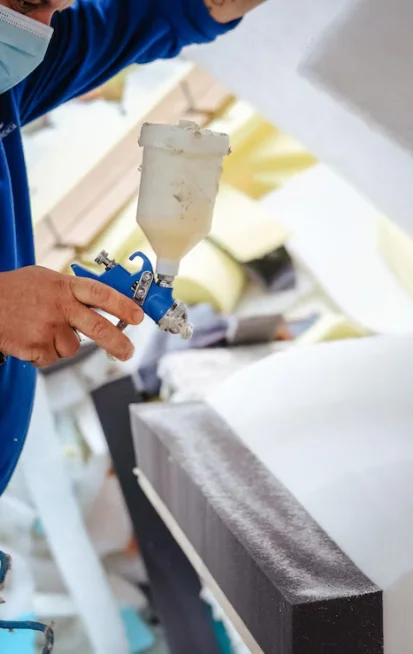
In the simplest terms, this is a dry finishing process. Instead of using liquid paint mixed with solvents, a fine, dry powder made of pigment and polymer resin is sprayed onto a metal surface using an electrostatic spray gun. The coated part is then placed in a curing oven, where heat melts the powder into a smooth, uniform film that bonds chemically to the metal substrate.
The result is a finish that’s tougher, more uniform, and significantly more durable than anything liquid paint can deliver. Think of it like spray painting, but with dry powder that turns into a hard, baked-on coating after it’s heated in an oven.
Traditional wet paint relies on solvents that evaporate as the coating dries often releasing harmful VOCs (volatile organic compounds) into the air. Dry powder contains no solvents at all. Any overspray inside the booth can be collected and reused, which means almost no material is wasted. The film built in a single application is also significantly thicker and more consistent than what you’d get from multiple coats of liquid paint.
Types of Powders Used in the Process
Thermoset Powders
Thermoplastic Powders
Specialty Powders
How the Powder Coating Process Works
Surface Preparation and Pretreatment
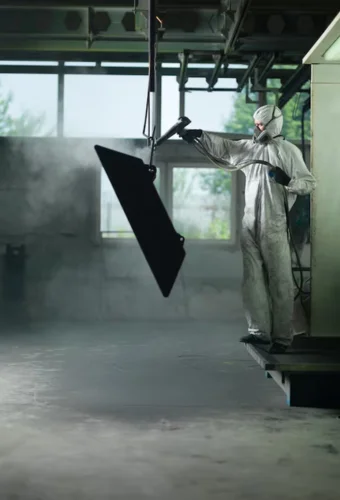
Electrostatic Powder Application
Curing in the Oven
Cooling and Quality Inspection
Key Benefits of Powder Coating
Superior Durability
Eco-Friendly Production
Cost-Effective Over Time
Aesthetic Versatility
Common Uses of Powder Coating
It’s hard to find a manufacturing sector that doesn’t rely on this finishing method somewhere. The automotive industry leads by volume alloy wheels, chassis parts, engine brackets, suspension components, and EV battery housings all use it to resist road salt, stone chips, and weather. Two-wheelers, bicycles, and electric vehicle motor casings have further expanded this segment in recent years.
Home appliances and architecture come next. Refrigerators, washing machines, ovens, water heaters, and ACs use this finish for its scratch resistance and clean look. On the construction side, aluminium window frames, façade panels, gates, and roofing sheets rely on architectural-grade polyester powders that hold up for 20+ years outdoors.
Industrial and agricultural equipment forms the most demanding category. Tractors, harvesters, irrigation pumps, factory machinery, storage racks, and electrical panels are routinely finished using this method. Heavy machinery benefits especially from the cross-linked film that resists mud, fertilizer salts, and constant mechanical stress in the field.
How Powder Coating Compares to Other Finishes
Knowing where this technology beats the alternatives and where it doesn’t help you make the right choice for any project.
The dry powder process delivers a thicker, more uniform film with no VOCs and lower long-term cost. Liquid paint still has the edge for very small one-off jobs or surfaces that can’t handle oven heat.
Electroplating offers a metallic look but is more expensive, harder on the environment, and limited in color choice. Dry powder finishing is the better all-rounder for most painted-metal use cases.
Conclusion
Now that you understand what this finishing method involves and why it matters, the next question is who you trust to do it well. Quality varies dramatically between coating shops, and the difference shows up in how long your product actually lasts in the real world.
Prismcoats has built its reputation on exactly that consistently high-quality powder coating services across automotive, architectural, industrial, and specialty sectors. With modern pretreatment lines, advanced spray booths, in-house testing labs, and certified processes, every part that leaves our facility meets the standards your industry demands.
Ready to give your product a finish that lasts? Get in touch with the Prismcoats team for a free consultation, sample panel, or quote tailored to your project. Whether you need automotive durability, architectural UV resistance, or specialty antimicrobial properties, quality powder coating starts here, and we’ll match you with the right powder chemistry and process the first time.