
Table of Contents
Introduction
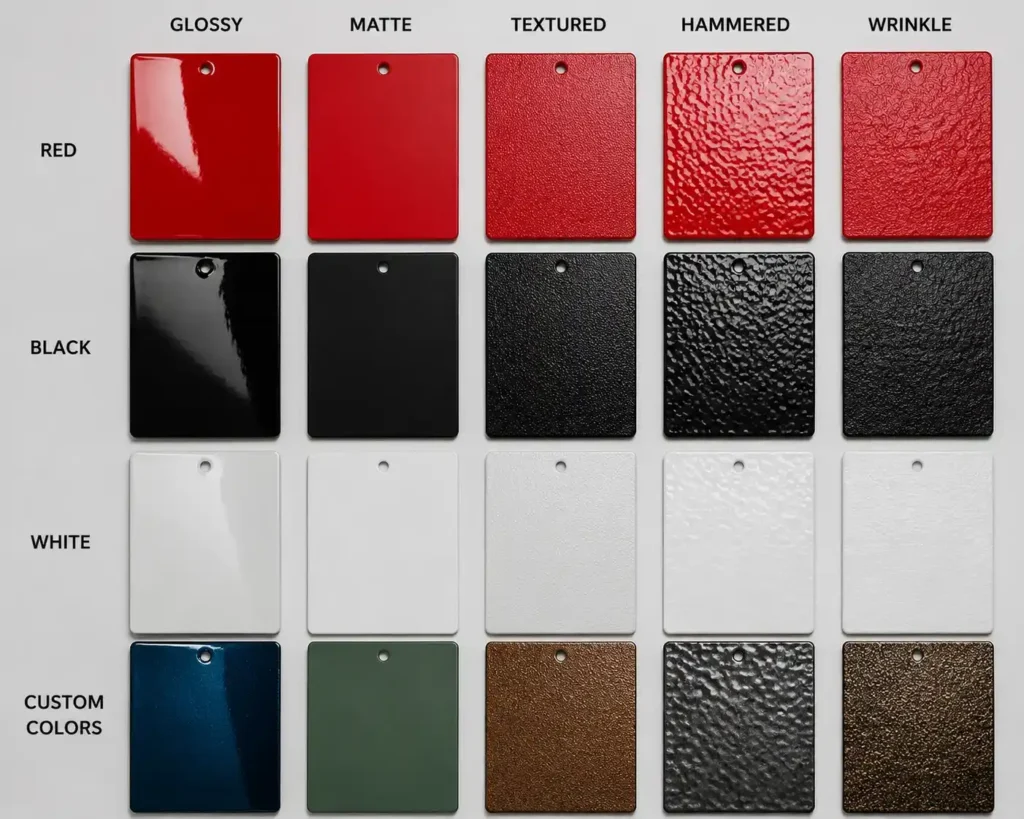
When most people think about coating metal products, they focus on color first red, black, white, or something custom. But anyone who has worked with metal finishing for more than a few projects will tell you that the surface character matters just as much. A glossy red looks completely different from a matte red, and a hammered-tone red feels almost like a different product entirely. This guide walks you through the main types of powder coating finish options available today, when to use each one, and how to avoid common pitfalls all in plain language, backed by real-world experience.
Understanding What "Finish" Really Means
In the metal coating world, the word “finish” refers to the visual and tactile character of a cured surface how shiny it is, how rough or smooth, how light reflects off it, and how it feels under your fingertips. Two products painted with the exact same shade of blue can look completely different depending on which powder coating finish is chosen.
This effect is created during the manufacturing of the powder itself. By varying the resin chemistry, particle size, and additives, manufacturers control how the surface cures flat and dead, mirror-like, or anywhere in between. Curing temperature, oven dwell time, and film thickness during application also play a meaningful role in the final appearance.
How Finish Differs from Color and Texture
Glossy Finish: Bright, Reflective, and Premium
Visual Characteristics and Where It Shines
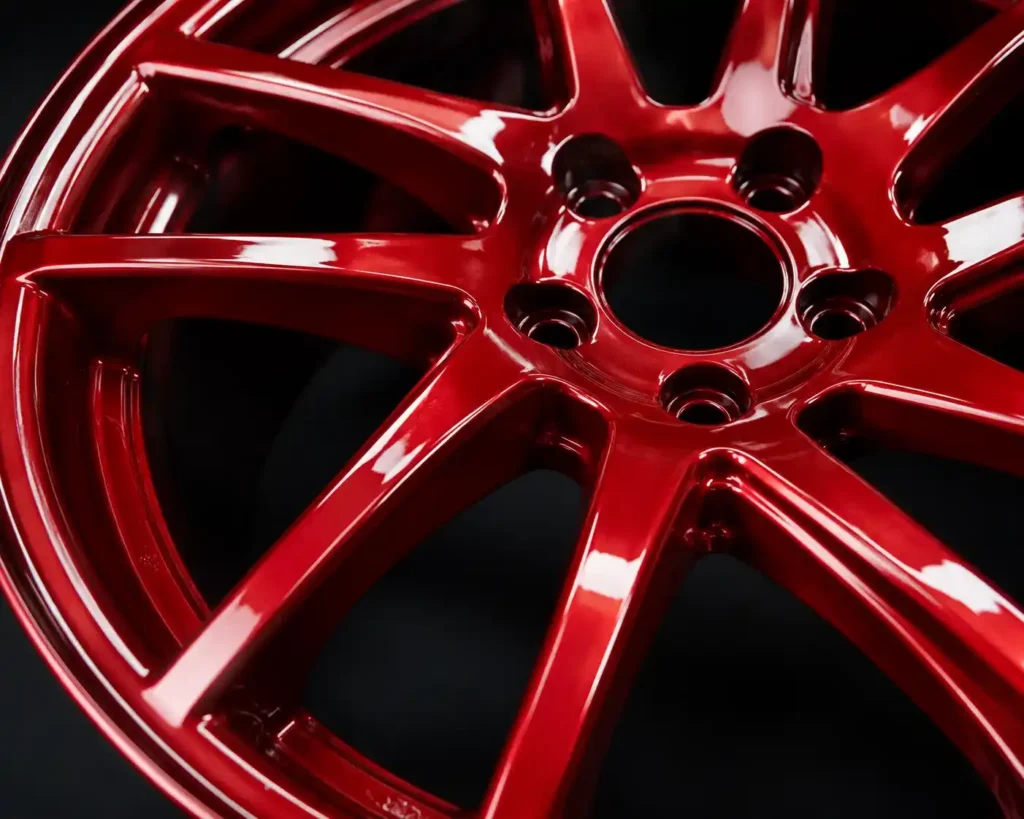
Gloss is the go-to choice for automotive parts, premium consumer goods, kitchen appliances, and any application where the customer expects a showroom-grade appearance. The reflective quality makes colors look richer and adds perceived value. It’s also the easiest surface to wipe clean water, soap, and a microfiber cloth can handle most contamination effortlessly.
Best Applications
Things to Consider Before Choosing Glossy
Matte Finish: Subtle, Modern, and Sophisticated
On the opposite end of the spectrum sits a low-sheen surface that typically reads below 10 gloss units. Matte doesn’t reflect light back at the viewer; instead, it scatters light, creating a soft, understated appearance that has become hugely popular in modern design.
Why Matte is Trending
Ideal Use Cases for Matte
Pros and Limitations
Satin Finish: The Middle Ground
Textured Finishes: Function Meets Aesthetic
Textured options add a physical dimension to the surface bumps, ridges, patterns, or roughness you can actually feel. They serve both decorative and practical purposes and are widely used across industrial and consumer applications.
Hammered-tone Finish
Wrinkle Finish
Sand and Stone Texture
When to Choose Textured
Specialty & Decorative Options Worth Knowing
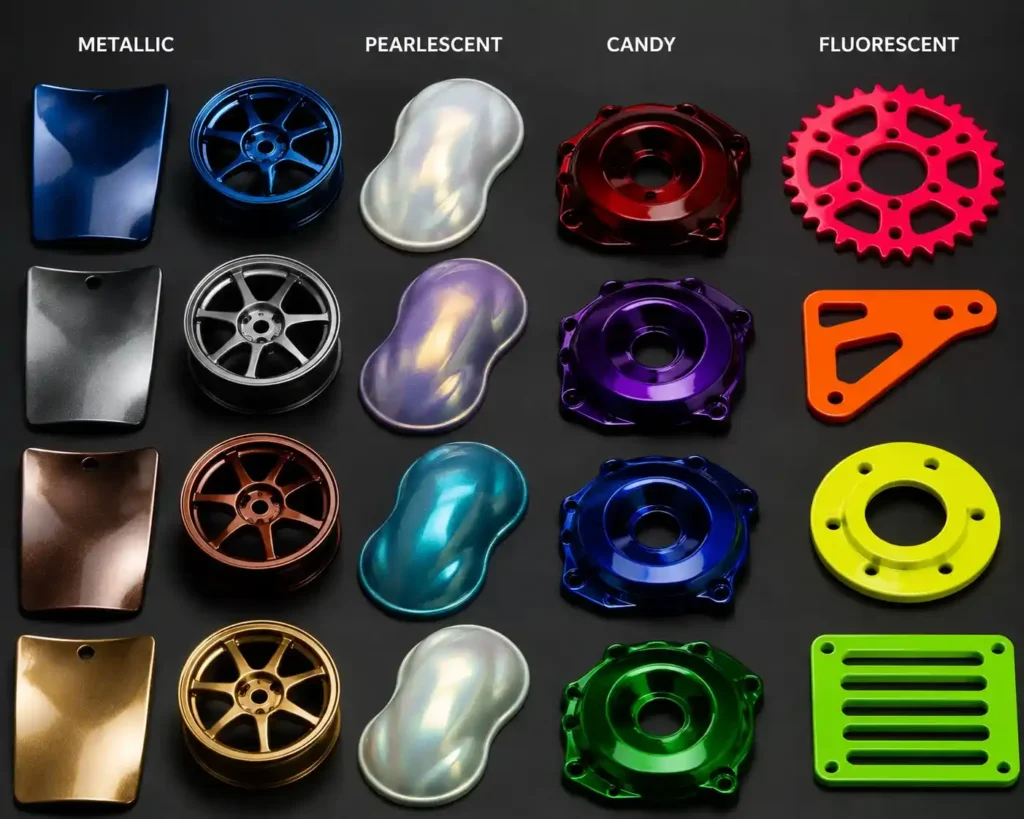
Beyond the main categories, several specialty options expand creative possibilities. Metallic finishes incorporate aluminium or mica flakes that catch light and shimmer subtly. Pearlescent surfaces shift color slightly depending on viewing angle. Candy finishes using translucent layers over a base color for incredible depth. Fluorescent and neon options offer maximum visibility for safety equipment, bicycles, and sports gear. These are typically more expensive and require skilled application, but they create show-stopping results.
Glossy vs Matte vs Texture Quick Comparison
Here’s a snapshot of how the three main families compare:
- Sheen Level: Glossy is highly reflective, matte is flat, and textured varies
- Hides Defects: Matte and textured do; glossy magnifies them
- Ease of Cleaning: Glossy is easiest, textured is hardest
- Scratch Visibility: Most visible on dark glossy, least on textured
- Best For: Glossy = consumer goods; matte = modern décor; textured = industrial & outdoor
How to Choose the Right Finish for Your Project
Indoor vs Outdoor Use
Substrate Condition
Aesthetic and Functional Goals
Common Mistakes to Avoid
The most frequent errors we see include picking glossy for rough-welded surfaces, using matte in high-touch areas where fingerprints will show, ignoring the curing temperature requirements of textured powders, and skipping physical sample panels. Always request a real sample on a representative substrate before approving any large order. Digital previews and printed catalogs never tell the full story.
Another common mistake is assuming all suppliers deliver consistent results. The same powder applied by two different coaters can look dramatically different due to variations in pretreatment, spray pattern, and oven control. Working with a certified, experienced applicator matters far more than the powder brand alone.
Conclusion
After years of refining our craft, Prismcoats has earned the trust of clients across automotive, architectural, industrial, and consumer goods sectors. We offer a complete range of powder coating finishes from mirror-grade gloss to deep matte, hammertone, wrinkle, stone texture, and premium specialty effects backed by certified application processes, strict quality control, and consistent batch-to-batch accuracy you can count on for repeat orders.
Whether you’re working on a single custom build or sourcing for high-volume production, our technical team helps you select the right resin system, sheen level, and texture for your exact requirements. Visit Prismcoats or call our experts today to request free sample panels and a no-obligation quote. Make your next project last longer, look sharper, and stand out for all the right reasons.