
Table of Contents
Introduction
Picture a small fabricator near Surat. Call him Ravi. He needs 800 kg of coating powder for a batch of steel almirahs, so he grabs the cheapest quote on his phone. Delivery day, everything looks perfect. Three months later? Flaking edges. Angry dealers. A very long week. If you’re searching for the top powder coating manufacturers in India, you’ve probably met ten lists already, and most of them just throw brand names at you. This guide tries to do more. By the end, you’ll know who is worth a call and, honestly, more important, what to ask before you trust anyone with your money.
Here’s a line worth remembering. A coating is the skin your product wears for ten years. You wouldn’t pick skin by price alone. And one thing rarely gets said out loud: plenty of peeling problems that get blamed on the paint shop actually start with the powder in the bag.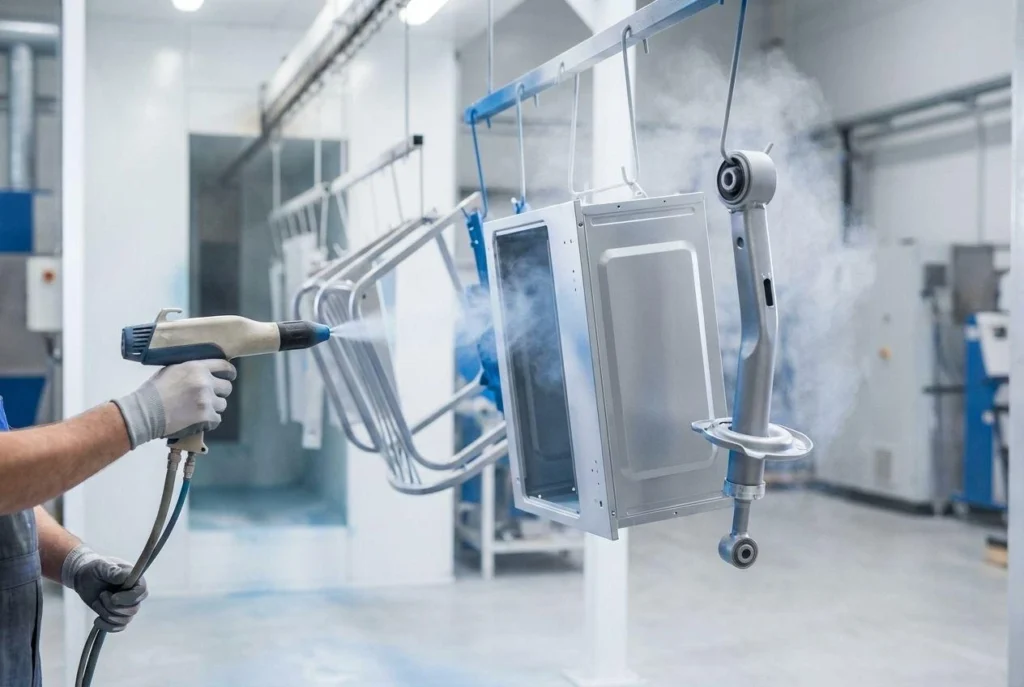
What Is Powder Coating, and Why One Supplier Mistake Costs So Much
Let’s keep the definition simple. It’s a dry, coloured powder. It gets sprayed on a metal part with an electrostatic gun, so the particles cling like dust on a TV screen, and then the part goes into an oven. Heat melts the powder, it flows, it cures. Done. What you get is a hard, even skin with no solvent involved.
How is that different from liquid paint? Liquid paint carries its pigment in a solvent that evaporates away. That means fumes, runs, drips and often several coats. The dry method gives a thicker finish in one pass, wastes less because overspray can usually be collected and reused, and releases almost no VOCs. That’s why you see it on almirahs, office furniture, aluminium windows, two-wheeler parts, home appliances, machinery and even park benches.
So why does the supplier matter so much? Because you discover a bad batch at the worst possible moment. After the parts are cleaned, sprayed, baked, packed and sometimes delivered. Fixing it means stripping everything and starting again. Time gone. Money gone. Reputation, a little bruised. A good supplier saves you from that. A careless one hands you the bill later.How the Powder Finishing Industry Grew Across India
There was a time when many Indian buyers depended on imported powders or a handful of big names. That has changed. Demand from aluminium extrusion for construction, automobiles and two-wheelers, white goods, metal furniture and electrical panels kept climbing, and local manufacturing grew to meet it. Today you can choose from multinational brands with Indian plants, large domestic paint houses and smaller specialist makers.
Local production changed the game in two ways. Lead times shrank, because nobody waits weeks for a container anymore. And shade matching became faster, since the manufacturer sits a day or two away, not an ocean away. Imported powders still have a place, especially for specialised architectural grades. But for most everyday jobs, a good Indian manufacturer is simply more practical.
Geography matters more than people think. Type powder coating manufacturers Gujarat into Google and the results bunch up around Surat, Vapi, Ahmedabad and the Sarigam belt, close to resin and pigment suppliers, ports and a big base of aluminium and furniture buyers. Search powder coating manufacturers Mumbai and you’ll mostly land on Thane and the wider Mumbai region, where several established paint companies have run plants for decades. And Pune? Buyers there, mostly auto-component and engineering units typing powder coating manufacturers Pune, tend to care about delivery speed and batch consistency more than exotic shades. Different cities, different priorities. Worth knowing before you shortlist.Types of Coating Powder, Explained Simply
Epoxy, Polyester, Hybrid and PU: What Fits Where
Think of these as four different personalities. Epoxy is the tough one. It’s great against corrosion and chemicals, brilliant for indoor items like pipes, panels and machinery, but it chalks and fades under sunlight. Polyester is the sun-lover. Pure polyester holds colour and gloss under UV, which is why it’s the go-to for aluminium windows, facades and outdoor furniture. Hybrid, the epoxy-polyester blend, sits in the middle. It’s economical, looks good and handles indoor jobs like almirahs, appliances and office furniture really well. Polyurethane is the specialist, valued for smooth, hard, chemical-resistant surfaces in certain industrial uses, usually at a higher price.
Here’s a simple test. Where will the product live? Inside a room, hybrid is usually enough. Under open sky, ask for pure polyester. If a supplier recommends epoxy for your outdoor gate, walk away. Politely.
Indoor, Outdoor and Finish Choices: Matt, Gloss, Texture, Metallic
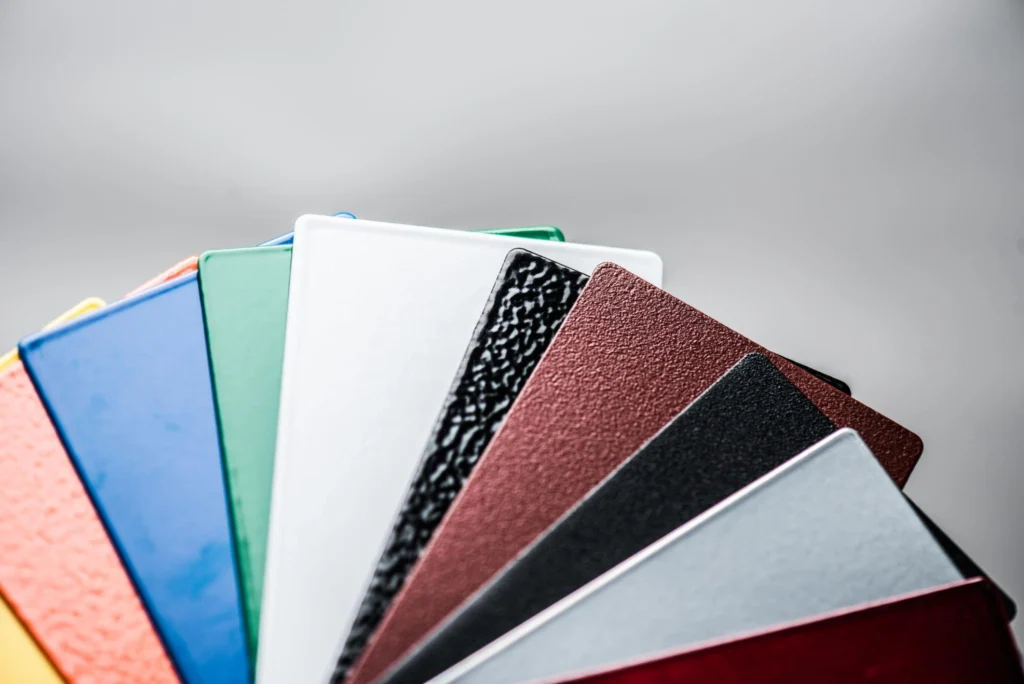
Indoor and outdoor we’ve covered, but finish deserves its own moment. Gloss looks sharp and clean, though it shows every dent and weld mark. Matt is calmer and hides small flaws. Texture and structure finishes are the quiet heroes on cast parts, rough welds and anything that needs to hide tool marks. Metallic finishes bring the sparkle, and here’s the catch: bonded metallics stay consistent from one spray to the next, while non-bonded ones can vary between jobs. Ask which one you’re getting.
Colour matters too. RAL shades are the common language in India, but two batches of the same RAL code can look slightly different if the supplier’s process isn’t tight. We’ll come back to that.
Top Powder Coating Manufacturers in India
How We Built the Shortlist: Our Criteria
Profiles of Leading Manufacturers and a Comparison Table
When people ask about the largest powder coating manufacturers in India, they usually mean the big paint houses. Fair enough. Size brings reach, deep R&D and stock in many cities. It can also bring higher minimum orders and less attention for smaller buyers.
Kansai Nerolac, headquartered in Mumbai, is one of India’s biggest industrial coating companies and has long been associated with powder finishes for automotive and appliance work. Asian Paints PPG, the joint venture of Asian Paints and PPG, serves industrial users and has a powder plant at Sarigam in Gujarat. Berger Paints, based in Kolkata, offers powders alongside a wide industrial range and has strong distribution. AkzoNobel’s Interpon is among the best-known powder brands worldwide, and its Indian business, now operating as JSW Dulux, has historically made it at Thane. Jotun, the Norwegian group, is present in India too and is often considered for architectural and outdoor-grade work.
Then come the specialists. Prism Colour Coats, from Surat in Gujarat, manufactures epoxy-polyester and pure polyester powders in gloss, matt, structure, texture, metallic and antique finishes, aimed at fabricators, job coaters and OEMs who want direct-from-factory supply. Full disclosure: Prismcoats is the team behind this blog, so read our own entry with a pinch of salt and compare us honestly.
Here’s a quick side-by-side. Treat it as a starting point and verify each row on the company’s own website.
| Manufacturer | Base | Known For | Often Suits |
|---|---|---|---|
| Kansai Nerolac | Mumbai (HQ) | Large industrial coatings, automotive and appliance work | Big OEMs with strict approvals |
| Asian Paints PPG | Sarigam, Gujarat (plant) | Industrial and appliance segments | Mid to large industrial buyers |
| Berger Paints | Kolkata (HQ) | Wide industrial range, strong distribution | Buyers who value dealer reach |
| AkzoNobel India (JSW Dulux) | Thane (plant, historically) | Interpon brand | Architectural and premium finishes |
| Jotun India | Norwegian group | Architectural, outdoor-grade work | Facade and aluminium jobs |
| Prism Colour Coats | Surat, Gujarat | Epoxy-polyester and pure polyester powders, texture, metallic and antique finishes | Fabricators, job coaters, small to mid OEMs |
One more thought on big versus small. Large names may suit strict OEM approvals better. Specialists may suit flexible batch sizes, custom shades and a phone call that actually gets answered. Both are valid. It depends on your requirements.
Top Powder Coating Manufacturers in India
Proof of Quality: Certifications, Test Reports and Batch Consistency
The Business Side: Cost per Sq. Meter, Lead Time and Technical Support
Price per kg is a trap. What you really pay is the cost per square meter coated. As a rough guide, one kg of a typical powder covers around 10 to 11 square meters at 60 microns before wastage, but a heavier or poorly made powder covers less. So the cheaper bag can quietly become the expensive one. Ask for coverage figures and run a small trial.
Then look at lead time and stock. Can they supply 250 kg in a week, or does every order take a month? Can they do custom shade matching, and how fast? And technical support, the thing nobody budgets for. A good manufacturer helps you set the cure schedule, troubleshoots orange peel or pinholes, and shows up when something goes wrong.
Buyer Mistakes That Lead to Regret Later
Mistake one is buying on price alone. We’ve all done it. A quote comes in 15 percent cheaper and the brain does happy math. Then the recoat bill arrives. Cheap powder often hides cheap resin, cheap pigment or poor grinding, and you only see it after baking.
Mistake two is skipping the sample test. It takes one afternoon. Spray ten parts, bake them, scratch, bend, drop, and leave one outside for a couple of weeks. Boring? Yes. Cheaper than rejecting a full lot? Always.
Mistake three is forgetting your own plant. Powder doesn’t work alone. Your pretreatment, oven temperature, line speed and even humidity in the booth decide how it behaves. A powder that cures at 180 degrees for 15 minutes won’t thank you if your oven only reaches 160 at the part. Tell the supplier your real conditions, not the textbook ones. And fix your pretreatment, because even the best powder can’t stick to oil. Most failures are small mistakes stacked on top of each other. Spot them early.Final Thoughts
Ravi’s story ends better than it began. He now asks for test reports, runs a sample, and buys from a manufacturer who picks up the phone. His almirahs hold up, and his dealers have stopped calling for the wrong reasons. Choosing the right powder coating supplier isn’t about the biggest name or the lowest rate. It’s about proof, consistency and support, in that order.If you’d like to talk shades, finishes or samples, the team at Prismcoats is happy to help.