
Table of Contents
Introduction
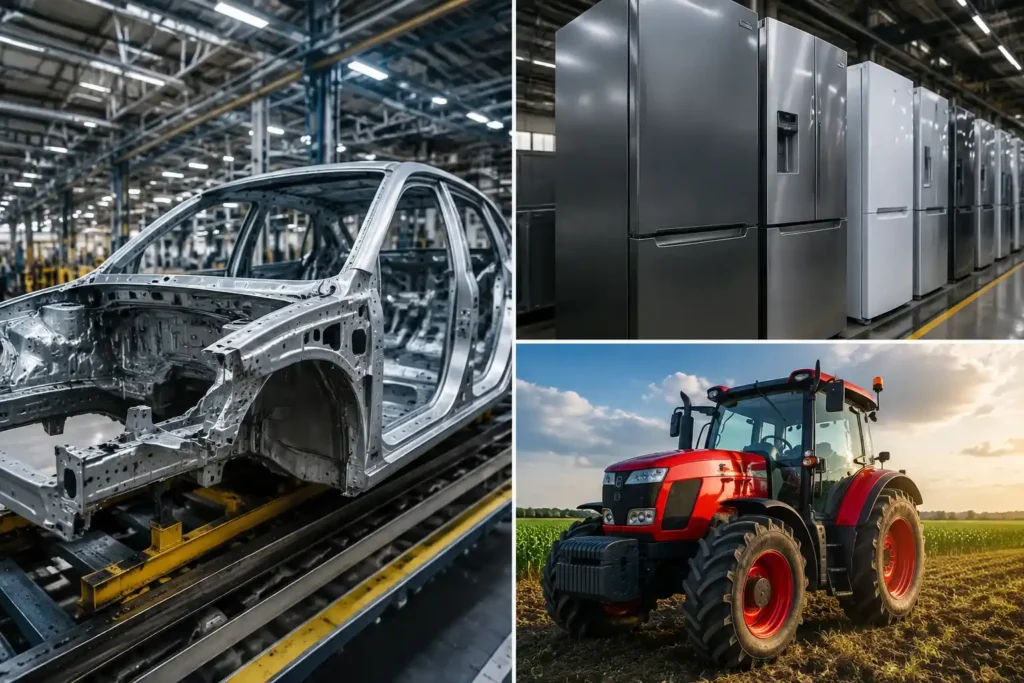
When manufacturers need a finish that protects metal for decades, not just a fresh coat of paint that chips within a year, they almost always turn to industrial powder coating. From the chassis of your car and the body of your refrigerator to the bright red tractor working in a farmer’s field, this finishing method quietly shields billions of metal surfaces around us every single day.
If you’re new to the world of surface finishing, this guide breaks down what powder coating really is, how the process works step by step, the real benefits driving its rapid adoption across manufacturing, and the industries that depend on it. By the end, you’ll know exactly why this technology has replaced traditional liquid paint in so many critical applications.
What Is Industrial Powder Coating and Why Does It Matter?
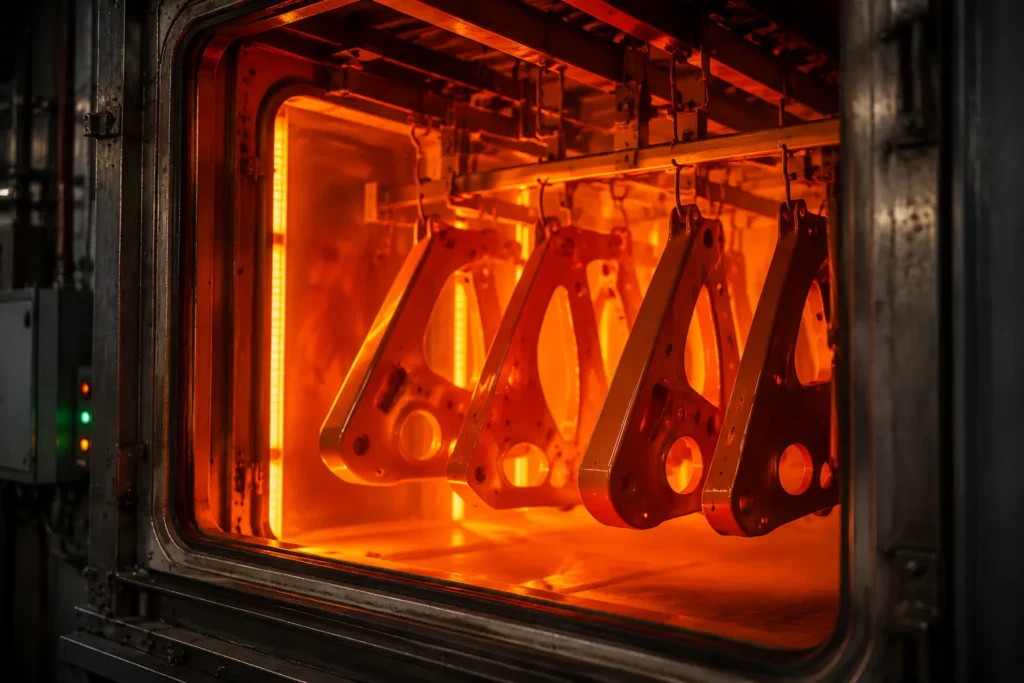
Industrial powder coating is a dry finishing process in which finely ground particles of pigment and polymer resin are electrostatically charged and sprayed onto a clean metal surface. The coated part is then sent into a curing oven, where heat melts the powder into a smooth, durable film that bonds chemically to the substrate. Because no solvents or thinners are involved, the entire process is cleaner, safer for workers, and significantly more eco-friendly than traditional wet paint systems.
The result is a finish that’s tougher than conventional liquid paint and resistant to chipping, scratching, fading, and corrosion. For industries that need parts to hold up against rain, salt, chemicals, sunlight, and constant mechanical wear, this level of protection matters enormously. It’s the difference between a product that looks great for two years and one that still looks great after twenty.
How It Differs From Liquid Paint
Liquid paint relies on solvents that evaporate as the coating dries, often releasing harmful VOCs (volatile organic compounds) into the air. Dry powder contains zero solvents. Any overspray inside the booth can be reclaimed and reused, meaning almost no material goes to waste. The single-application film is also significantly thicker and more uniform, delivering stronger protection in fewer steps. There are no drips, no runs, and no unevenness in hard-to-reach corners.
The Step-by-Step Process Behind a Flawless Powder Coat Finish
Surface Preparation and Pretreatment
Everything starts with cleaning. Metal parts arrive covered in oil, grease, rust, mill scale, and factory dust, and none of that contamination can remain if you want the coating to adhere properly. Components pass through a series of chemical baths, typically degreasing, rinsing, pickling, and phosphating, to strip contaminants and create a microscopically rough surface that bonds well with the powder. Some facilities use sandblasting or shot blasting for heavier rust and old paint removal. Pretreatment is often called the “make-or-break” stage; industry experts agree that more than 70% of coating failures trace back to poor surface preparation.
Electrostatic Powder Application
Curing and Cooling
Key Benefits Driving the Demand for Industrial Powder Coating
Long-Lasting Durability and Corrosion Resistance
Eco-Friendly and Cost-Effective
Aesthetic Versatility
Common Uses of Industrial Powder Coating Across Sectors
Automotive and Transportation
Home Appliances and Consumer Goods
Architecture and Construction
Agricultural and Heavy Equipment
Tractors, harvesters, irrigation pumps, sprayers, and storage silos face punishing conditions in the field. The thick, tough film delivered by industrial powder coating helps this machinery run for decades through dust, rain, fertilizer exposure, and constant mechanical stress.
How to Choose the Right Industrial Powder Coating Partner
What to Look for in a Service Provider
Certifications and Quality Standards
Reputable coaters work to international standards such as ISO 9001 for quality management, ISO 12944 for corrosion protection, and ASTM testing protocols for performance verification. Approvals like Qualicoat or GSB Premium are strong signals, particularly for architectural projects where the finish must perform for decades. Don’t hesitate to ask for documentation, serious shops are happy to share it.
A trusted partner should also guide you on the right powder chemistry epoxy for indoor parts, polyester for outdoor exposure, or epoxy-polyester hybrid systems for specific performance needs. Their willingness to consult, not just spray, separates a true expert from a basic job shop.
Conclusion
If you’re searching for an industrial powder coating partner that brings together technical expertise, modern infrastructure, and a proven track record across automotive, architectural, and industrial sectors, Prismcoats is built exactly for that. With certified processes, advanced pretreatment lines, in-house quality testing, and a team that understands what every project demands, Prismcoats helps brands deliver products that look better, last longer, and stand out in their market.
Ready to upgrade your product’s finish? Get in touch with Prismcoats today for a free consultation, a sample panel, or a custom quote tailored to your project requirements. Quality industrial powder coating starts with the right partner, and you’ve just found one. Visit the Prismcoats website or call our team to discuss your next project.